

Praktijk Eigentijds Ondernemen

Een praktijkgroep voor ondernemers die hun onderneming met en door de zes sleutels en vrij gelijk samen willen verdiepen, verbreden en vernieuwen.

De essentie van de praktijkgroep

De essentie van deze praktijkgroep is om je eigen ondernemerschap te verbreden, verdiepen en vernieuwen. Deze groep biedt ruimte en tijd om in het licht van Gelijk-Vrij-Samen en de Zes Sleutels te zoeken naar het verder ontwikkelen en verankeren van jouw ondernemerschap, zodat jij oefent hoe jij de bron in het midden van jouw organisatie wakker kan kussen en ruimte kan geven om tot bloei te komen.

Voor wie en hoe

Deze praktijkgroep is er voor ondernemers met een bestaande onderneming en een zekere omvang (bedoelende: met meerdere medewerkers en/of mede-vennoten en/of mede-aandeelhouders) die een ontwikkel-behoefte hebben.

De ondernemers zijn al bekend met Vrij, Gelijk, Samen en de zes sleutels door minimaal al het volgende te hebben gedaan:

  • deelname aan de tweejarige leergang Samenlevenskunst – of
  • deelname aan het Verkenningsjaar Eigentijds Ondernemen.


Verdere instap-vragen:

  • Je voelt een heldere JA ten aanzien van Gelijk-Vrij-Samen en de uitgangspunten die daarbij horen (zie verder onderaan)
  • Je wilt van binnen-naar buiten als liefdevol scheppend wezen actief zijn.
  • Omdat de praktijkgroep bestaat bij de gratie van de inbreng van de deelnemers, wordt je als deelnemer actief voorafgaande de bijeenkomst je vraag mee te brengen.
 
Verdere verbindingsvoorwaarden:
  • Je bent bereid om op jezelf te reflecteren, ook in relatie tot de schaduw driehoeken.
  • Je bent bereid een veilige sfeer te creëren in de groep waarin alles gezegd en onderzocht kan worden
  • Je hebt het verlangen om het onderzoek naar vernieuwing aan de hand van de zes sleutels aan te gaan.
  • Mogelijke schuring is vuur voor verbinding en kijken we met elkaar aan om van te leren. 

Waar kun jij eigenaar van worden?

De basis van deze praktijkgroep zijn doorleefde ervaringen en inzichten van Economy Transformers als geheel, gekoppeld aan Gelijk-Vrij-Samen en de Zes Sleutels – en die van Jennifer als begeleider van de groep.

De wijsheid van de groep biedt gelegenheid tot een vermenigvuldiging van inzichten.

In de praktijkgroep wordt je gevraagd eigenaarschap te nemen over je eigen ervaringen, inzichten en schaduwen en spreekt vanuit je IK waarmee we algemeenheden en theoretiseren voorkomen. Alle opgedane inzichten en ervaringen zijn van iedereen zelf, maar ook van Economy Transformers als geheel, als bronbijdrage aan de ontwikkeling.

Earth

We sluiten aan bij de behoeften in de groep en gaan zo snel als we gaan. We richten ons op ieder individu met zijn of haar praktijksituatie, wat vaak weer functioneert als een spiegel voor je eigen praktijk. We zijn wakker voor welke inzichten er geboren mogen worden, wat er losgelaten mag worden of mag sterven.

Je bent je ervan bewust dat deze praktijkgroep een onderdeel is van een groter proces, waar anderen (zoals medewerkers/mede-vennoten/mede-aandeelhouders) ook toe uitgenodigd mogen worden.

De groep is voor maximaal 5 deelnemers.

De praktijkgroep komt 7x bij elkaar, startend in oktober en met de laatste dag in april, om alle ruimte te geven aan de zomer.

De plek waar we deze training houden is nog niet bekend. Ik oriënteer mij momenteel op Weesp of Utrecht. Denkbaar is het ook dat de praktijkgroep rondreist.

Wat ontvang je?

De ruimte die geschept wordt biedt gelegenheid jouw eigen onderzoek te doen naar jouw vraagstukken voor jouw onderneming.

Voorbeelden hierbij zijn:

  • het beleven van jouw onderneming als levendige organisatie met een helder midden
  • vormen en ideeën over hoe je beter kan gelijk-vrij-samenwerken
  • vormen en ideeën hoe met waarde-stromen, organisatie-ontwikkeling en relatie-vraagstukken om te gaan.
  • meer helderheid over je eigen plek.
  • handreikingen hoe je met vraagstukken kan omgaan.

Het biedt ook gelegenheid om je stappen, intenties of wensen te toetsen aan de groep, alvorens je ze naar je onderneming brengt. 

Elke bijeenkomst is er tijd voor ieders casus. Op basis van die inventarisatie vóór, of aan het begin van, de dag, creëert Jennifer ter plaatse een congruent programma wat erbij aansluit.

Concreet is de waarde:

  • de inhoud van de 7 bijeenkomsten
  • Jennifer als mede-bronorgaan-lid van jouw bron, die je daardoor ook tussendoor telefonisch of online mee kunt sparren.

Organization

Data en tijden en locatie zijn nog onder raadpleging en kan nog gewijzigd worden!
 

De data zijn: maandagen 13 oktober, 10 november, 8 december, 12 januari, 9 februari, 9 maart, 13 april

De tijden zijn: 9.30 inloop. Van 10.00 tot 17.00 met een lunch tussen 13.00 en 14.00.

  • Locatie wordt nog bepaald
  • Lunch is potluck. Voor lekkers en drinken wordt gezorgd.
  • De praktijkgroep wordt begeleidt door Jennifer Benson. Zij is verantwoordelijk voor de kwaliteit en de inhoud en vorm van deze praktijkgroep. 
  • De inhoud qua casuïstiek van de praktijkgroep wordt bepaald door iedere deelnemer.
  • Jennifer neemt de besluiten over de vorm en raadpleegt daar waar wenselijk cq nodig de groep.
  • Het Brondocument van Economy Transformers, zie elders op onze website, is altijd leidend mocht er iets in dit document niet helder zijn.

Vereffening

Er zijn drie uitgangstarieven. Aan de deelnemer om zelf te bepalen wat het gepaste tarief is.

  • Vrij: 900,- (dat wat minimaal nodig is)
  • Gelijk: 1500,- (wanneer de vereffening in balans is)
  • Samen: 2500,- (wanneer je ons werk ook voor anderen mogelijk maakt)

Dit tarief is exclusief 21% BTW.

* Als je al deelneemt in één van de leergangen, dan wordt jouw deelname beschouwd als onderdeel van je hele leergang waar we CRBKO voor geregistreerd zijn en ben je vrijgesteld  van BTW. 

Een intakegesprek online en een nagesprek waarin een mogelijk vervolg van de verbinding besproken wordt is inbegrepen.

Toekomstig verbinden

Na of tijdens deze praktijkgroep is er de mogelijkheid tot het aangaan van een BondGenootschap of Brongenootschap. Mogelijkheden hiertoe:
  • Instap Eigentijds Kapitaalorgaan
  • Bronwerk voor je onderneming
  • Instap in de Economy Transformers Gemeenschap

Locatie

Nader te bepalen

Ergens in de driehoek Almere – Weesp – Utrecht.
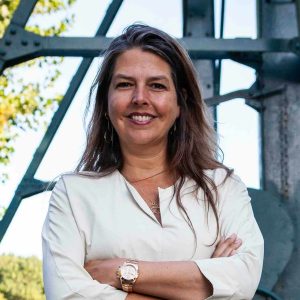
begeleiding

Economy Transformers

Jennifer Benson

Ik maak de intenties van ondernemen en samenwerken beleefbaar en begeleid ze naar praktische vormen. 

Economy Transformers is CRKBO geregistreerd.

This means that we meet quality requirements.

We are accountable for these quality requirements:

Alle informatie die we verstrekken is altijd waarheidsgetrouw en accuraat. Mocht je vragen hebben of iets willen delen, je kunt altijd bellen of mailen. Vóór je je inschrijft raden we je aan om de oriëntatiedag te doen. Als je overweegt om in te stappen, doen we ook een intake-gesprek. Ook tijdens deelname kun je altijd bellen of mailen of een afspraak maken voor een persoonlijk gesprek. Alles wat we bespreken blijft altijd onder ons.

All teachers live what they teach, so they are experts by experience in their field, and in addition, they are always approachable. 

Van te voren, tijdens en na de training is helder wat docenten en deelnemers van elkaar kunnen verwachten. Er zijn intake-gesprekken, tussengesprekken en evaluatiegesprekken. Als er onduidelijkheden zijn, kan er altijd gebeld of gemaild worden.

Als je op deze link klinkt, vind je een voorbeeld van een Verbintenis voor de Leergang Eigentijds Ondernemen: Commitment.

The teachers stand by the quality of their lessons and are accountable for it. Participants get out what they put in. If teachers feel that participants are not putting in enough, they will be lovingly addressed. Teachers and participants walk a path together in connection with themselves, each other and the whole.

The goal of all Economy Transformers education and training is to provide tools that participants can use to help themselves blossom socially to make the whole more beautiful, better, truer. Everyone helps each other in this process. Life itself is the examiner. Because we observe each other during the process, we will motivate, encourage, assist each other in time. As Economy Transformers, we will never test or examine. However, we do ask participants to present their development on a regular basis.

Click here for the complaint policy: complaints mechanism.
Economy Transformers

Economy Transformers Academy is CRKBO-registered. This means that we meet quality requirements in the field of short vocational education.

Our registration guarantees that we act with care, reliability and transparency, and that our trainings are in line with the needs of our participants. To the right, we explain the quality requirements step by step, so you can get an idea of the journey to and through 😉 the Cohabitation Art Course.

And you have the books Free, Equal & Living Together Of Damaris Matthijsen and The Fourth Scenario of Jac Hielema already read and listened to all the podcasts. Then you can sign up for a meeting night Economy Transformers comes to you or an Orientation Day Learning Walk Together. To get acquainted with the teachers' methods and potential fellow participants.

You are welcome to bring yourself in with any questions and answers you may have. You can always contact Jac Hielema, see: contact.

Then make an appointment with Jac Hielema for a one-on-one intake interview.

During that conversation, we get to know each other better and talk through the Commitment you will be emailed in advance, see: Commitment.

During the interview, Jac Hielema asks if you are willing to meet the participation requirements, Article 24. But more on that later.

First, this:

During the Art of Living Together course, among other things, you will learn about the so-called Six Keys to Transition, whole story. In addition to allowing you to set your own learning goals each year that the teachers will tailor their lessons to, there are also general learning goals of the Art of Living Together Course. These are them using those six keys:

General learning objective of the Art of Living Together course
The Samenlevenskunst course guides you on a profound journey of discovery into how you as a human being, with your unique qualities and inner strength, can contribute to a humane and Earth-worthy society. Through the six keys you will learn:

  • I am: Discovering your personal essence and unique motivations and using your intuition and creativity to guide your life. You will learn to live your own star and fulfill your potential.
  • Value: To understand what you have to give and how your abilities contribute to meeting real needs, both for yourself and others. You develop a healthy balance between giving and taking.
  • Property: Taking ownership of your experiences, insights and the choices you make. You explore how you deal with land, labor and capital, and how to manage them in connection with people and Earth.
  • Organization: Organize collaborations in a free, equal, together way. You will learn how to shape your power, (co-)control and decision-making from love and trust.
  • Relationship: Build responsible and authentic relationships, both with yourself, others, and the world. You develop communication that strengthens trust and deepens connection.
  • Earth: Aligning your actions with the natural cycles and boundaries of the Earth. You learn to live and work in harmony with the realities of nature and contemporary society while contributing to a sustainable and inclusive world.

The Course helps you not only understand these six keys, but also live them. You grow into a Collaborative Life Artist: someone who embodies and realizes both personal and social renewal from love and trust.


No prior knowledge of any kind is necessary. Starting point is always the human being as he or she is here and now, including her/his thoughts and feelings, in the reality as it is here and now. No more and no less. However, each participant is asked to meet the following conditions:

These are the participant requirements:

Participant declares that he/she:

        a. is willing to reflect on his/her own thinking and actions,

        b. feels a desire to get one or more ideals clear and realize them alone or with others,

        c. be willing to work with fellow participants to form a safe bed in which everything can be explored, discussed, questioned, named and done that is necessary to accomplish the above goals.

Participant should be familiar with the grievance procedure:

The complaint policy can be found here: complaints mechanism. And is based on the premise: we will work it out together and if not, we will find someone we both trust and ask her/him to act as a mediator.

Participant may rely on the confidentiality clause:

Everything that is discussed during the intake interview, lessons, interim conversations, conversations during exercises and the evaluation interview may be shared with third parties. It is hereby expressly requested to speak with integrity and discretion about all involved and situations.

The teachers and assistants lovingly and carefully exchange their observations and experiences with and about the participants. This is done with the aim of gaining an ever better understanding of each participant's learning needs and abilities, so that the guidance can be best tailored to them.

How do we work together to ensure a safe atmosphere during classes?

During classes, and in fact at every Economy Transformers meeting, we adhere to the following guidelines:

Safety guidelines for the Living Together Course:

1. I am

  • We are here to enable ourselves and each other. This means we focus on acknowledging and supporting each other's unique path without judging, analyzing, saving or improving.
  • Each participant has the freedom to participate or not in an exercise and/or to share what he or she has observed or experienced. This freedom is always respected, as long as the group process as a whole is not disrupted.
  • We take responsibility for our own thoughts, feelings, words and actions. We respect the other person's autonomy by not imposing meaning or expectations.

2. Value

  • We share candidly what we experience and live inwardly and outwardly. Our honesty and vulnerability are our contribution to the process, supporting and inspiring each other.
  • We do not hide our emotions such as pain, anger or sadness, but share them honestly, without holding others responsible. This contributes to the valuable exchange within the group.
  • If we see a judgment or analysis coming into us, we acknowledge it and then bring our attention back to ourselves and the other person in the here and now.

3. Property

  • We take ownership of our own feelings and experiences. This means we make ‘I’ statements, not ‘you/they/we’ statements and take responsibility for what we bring to the group.
  • When another shares his or her anger or hurt, we acknowledge it without defending ourselves or justifying our words and/or actions. We are, however, honest about what feelings come to us.
  • Everything we share with each other, we cherish respectfully in love and trust. We treat everyone's contribution as a valuable part of the shared process.

4. Organization

  • We give and take each other's undivided attention in the here and now. Silence and quiet are honored as an essential part of the group process.
  • If we feel we are losing sight of our learning goal, we discuss it together. For example, by striking the singing bowl and creating a moment of silence to refocus on our learning goal.
  • We respect the group structure and work together on the basis of equality. Everyone has the space to follow his or her own pace and process.

5. Relationship

  • We build relationships based on honesty, respect and recognition of each other's uniqueness. We are present in the here and now, without straying into the past or future unless relevant in the moment.
  • We listen attentively and without interruption to what the other person wants to share. When emotions or judgments arise, we acknowledge them within ourselves without projecting them onto the other person.
  • In relationships within the group, we respect everyone's learning and create a safe bed in which everything can be explored, discussed and shared.

6. Earth

  • We recognize the value of silence and rest as a natural basis for reflection and connection. These moments help us to connect with our own being, that of others and that of the whole of which we are all a part.
  • We stay rooted in the here and now and use our experiences to practice love and forgiveness, both for ourselves and others.
  • We see our group process as part of a greater whole. Everything we do and experience contributes to our own growth and the development of a human and Earth-worthy society.

Lock

We are aware that perfection does not exist and that sometimes we will deviate from these guidelines. We do not see this as a failure, but as an opportunity to learn and practice forgiveness, both for ourselves and each other. Together we work to create a safe and inspiring environment in which each can come into his or her own.


During the intake interview we also discuss the price. In the first year, Everyone can choose between three prices. And if the right price is not among them, we can make other arrangements.

The creation of the second- and third-year awards is part of the process.

You can pay the price for the Course in one, two or three installments.

We can also agree on another payment arrangement on the spot. However, we do strive for a proper balance of give and take.

During the 2025/2026 school year, Damaris Matthijsen and Jac Hielema will be providing a Curriculum in the Art of Living Together for the tenth year. In other words, they have been delivering for ten consecutive years without interruption. They take full responsibility for the quality of the course. There are regular evaluations, formal and informal. All criticism, tips, questions, comments and proposals are taken seriously and taken into account in the further development of the course. However, decisions are made by Jac and Damaris, who will always substantiate and explain them if desired.

Even if after the intake interview you are still not sure if you want to get in and join, you can at least participate in the first meeting. After the first meeting we ask you to make a decision. So that at the second meeting we will have formed a permanent group in which we will do the year.

Of course, anyone can always decide to drop out for any reason. Up to and including the fifth meeting, you will receive a partial refund of your tuition.

Do you have any questions or want to share anything else? You can do so by emailing Jac Hielema: [email protected] or to call him: 06-14687873

Kind regards,

Damaris & Jac

Hiernaast vind je diepere informatie over de uitgangspunten van Economy Transformers en ontwikkelintenties

Listed below are the four scenarios, based on what is in Free, Equal & Living Together and The Fourth Scenario is described:


The four scenarios

  1. The capitalist scenario (First Scenario).

    • Characteristics: Exchange and allocation of land, labor and capital are dominated by the market. Economic interest prevails and freedom is seen as the freedom of ownership and competition.
    • Criticism: Capitalism ignores equality and cohesion. It leads to inequality, exploitation and ecological destruction.
    •  
  2. The socialist scenario (Second Scenario).

    • Characteristics: Here the state becomes the dominant actor in society. Land, labor and capital are allocated through central planning and bureaucracy.
    • Criticism: Socialism denies freedom through its emphasis on state control. This often leads to alienation and inefficiency in the economy.
    •  
  3. The mixed scenario (Third Scenario).

    • Characteristics: A combination of market and state, mixing elements of capitalism and socialism. Often referred to as the Rhineland model, where economic decisions are influenced by both political elites and market participants.
    • Criticism: This scenario often combines the disadvantages of both capitalism and socialism, such as concentration of power with an elite and lack of true freedom and equality.
    •  
  4. The free scenario (Fourth Scenario)

    • Characteristics: The means of production are managed and allocated outside the market and state, through proper mutual consultation between stakeholders. Land, labor and capital are directed toward fulfilling common and individual needs, with respect for people and Earth.
    • Objective: Freedom, equality and cohesion are realized in an integrated way. The emphasis is on cooperation, local ownership and regeneration of natural and social systems.
    • Vision: This scenario offers a fundamental transformation of social structures and sees humans as the creators of a humane society.
    •  

With these four scenarios, The Fourth Scenario a clear contrast between existing social systems and a forward-looking, regenerative approach.

Hier is een beknopte uitleg van de zes sleutels zoals deze aan bod komen voor Gelijk, Vrij, Samenwerken (naar het boek Free, Equal & Living Together van Damaris Matthijsen):

De zes sleutels voor mens- en Aardewaardig ondernemen

  1. I amOndernemen vanuit de essentie

    • Dit gaat over zelfkennis en authenticiteit. Wie ben jij en jouw onderneming werkelijk? Wat is jouw unieke bijdrage aan de wereld?
    • Pas wanneer je jezelf en je onderneming goed kent en trouw bent aan je innerlijke drijfveren, kun je op een vrije en bewuste manier deelnemen aan de samenleving.
    •  
  2. ValueValue creation independent of financial compulsion

    • Reële waarde vervullen behoeften
    • In a healthy society, value is not determined by money, but by how much it contributes to people and Earth.
    •  
  3. PropertyLand, labor and capital at the service of the whole

    • Property is not a personal possession, but something to be handled responsibly.
    • In a free, equal and coexisting system, productive resources are managed in accordance with the community and the greater good.
    •  
  4. OrganizationCooperation based on equality

    • Decision-making and organization should take place in a way that does justice to everyone's voice and contribution.
    • Power is not concentrated, but distributed through natural authority and aligned structures.
    •  
  5. RelationshipConnection based on trust and openness

    • Healthy relationships in society are based on respect, listening and seeing the other as an equal fellow human being.
    • Relationships transcend ego interest and are focused on cooperation and mutual alignment.
    •  
  6. EarthCooperation with nature instead of exploitation

    • The Earth is not seen as a source of resources to be depleted, but as a living entity with which we must live in harmony.
    • A healthy economy and society respect ecological limits and regenerate rather than destroy.
    •  

Deze zes sleutels vormen samen een raamwerk voor het bouwen van een rechtvaardige, duurzame en menswaardige samenleving. Ze helpen zowel individuen als organisties en gemeenschappen om bewust en in harmonie met zichzelf, anderen en de Aarde te leven.

Shadow keys: When the six keys lose their power

When the six keys are not applied consciously and in connection, the following occurs shadow keys. These can be divided into two main patterns:

  1. The warning triangle - Fear, hatred and doubt keep man trapped in powerlessness and destructive interactions.
  2. The three false strategies - False surrender, false power and false hope disfigure our relationship to Earth, relationship and organization.

1. The danger triangle: fear, hate and doubt

  1. Fear (Shadow of ‘I am’)

    • Fear undermines the true Self and stifles inner freedom.
    • Instead of living from one's own essence, fear paralyzes the individual and makes them dependent on external affirmation or control.
    • Fear leads to conformism and avoidance of responsibility, making authentic action impossible.
    •  
  2. Hatred (Shadow of ‘Value’)

    • Hatred arises when the value of Self or other is not recognized and is hurt.
    • Instead of creating and recognizing real value, a desire for destruction arises: one wants to undermine oneself or others.
    • This leads to competition, envy and the belief that one can only prove oneself by beating another.
    •  
  3. Doubt (Shadow of ‘Property’)

    • Doubt destroys the ability to take ownership and responsibility.
    • Instead of consciously dealing with possession and responsibility, people get stuck in indecision, causing systems and structures to collapse or crash.
    • This leads to fear of loss, a sense of insecurity and an obsession with control.
    •  

Dynamics:

  • Fear paralyzes the Self and makes people dependent.
  • Hatred focuses outward, on the other, and creates division and conflict.
  • Doubt causes a failure to take responsibility, thus preventing real change.
  •  

2. The three false strategies: False surrender, false power and false hope

When fear, hatred and doubt control human beings too much, it creates three false strategies as ways of dealing with them. These shadows disfigure our relationship to Earth, relationship and organization.

  1. False surrender (Shadow of ‘Earth’)

    • Instead of truly cooperating with the Earth and life, a form of surrender arises that amounts to passivity and indifference.
    • This leads to an attitude of “it doesn't matter anyway,” spiritual detachment or even destructive nihilism.
    • The connection to the greater whole is not felt or acknowledged, thus preventing regeneration and care for life.
    •  
  2. False power (Shadow of ‘Relationship’)

    • Instead of building relationships based on trust and equality, power is used as a control mechanism.
    • This leads to manipulation, dependency relationships and hierarchical structures in which the other is not seen as equal.
    • True connection is replaced by dominance or submission.
    •  
  3. False hope (Shadow of ‘Organization’)

    • Instead of organizing clearly and taking responsibility for realistic change, a misplaced hope of external salvation or utopia arises.
    • This leads to the pursuit of illusions, unfounded ideals or blind faith in systems that do not work.
    • As a result, organization becomes chaotic, irrational or based on false certainties.

How do you free yourself from the shadow keys?

The key to transformation lies in awareness and taking responsibility:

  • Stepping out of the warning triangle means turning fear into trust, transforming hate into loving creation and replacing doubt with conscious ownership.
  • Breaking the false strategies means truly connecting with Earth, building relationships from equality and creating organizational structures that actually work and are supported by the community.

By applying the six keys consciously and in connection, a human- and Earth-worthy society can emerge.

General development intentions

The Contemporary Entrepreneurship course guides you on a profound journey of discovery into how you as a human being, with your unique qualities and inner strength, can contribute to a human and Earth-worthy society. This requires not only developing the six keys, but also seeing through and transforming the shadow keys that can keep you from doing so.

Through these six keys you will learn:


1. I am → From fear to inner freedom

  • Target: Discovering your personal essence and unique motivations and giving direction to your life from intuition and creativity. You will learn to live your own star and fulfill your potential.
  • Challenge: Fear can paralyze you, plunge you into doubt about who you are and make you dependent on external affirmation.
  • Question: How do you learn to trust your deepest being and make choices from inner certainty, instead of being guided by fear?

2. Value → From hatred to true creative power

  • Target: To understand what you have to give and how your abilities contribute to meeting real needs, both for yourself and others. You develop a healthy balance between giving and taking.
  • Challenge: Hatred and jealousy can arise when you do not recognize your value or when you perceive others' as threatening.
  • Question: How can you truly embrace your unique value and put it to work for the greater good without undermining yourself or others?

3. Ownership → From doubt to responsibility

  • Target: Taking ownership of your experiences, insights and choices. You explore how you deal with land, labor and capital and how to manage them in connection with people and Earth.
  • Challenge: Doubt can keep you from taking responsibility, leaving you stuck in indecision or powerlessness.
  • Question: How do you learn to perceive clearly and take responsibility confidently for what your task and role in the world is?

4. Organization → From false hope to true creativity

  • Target: Organize collaborations equally and naturally. You will learn how to shape power, control and decision-making from trust and equality.
  • Challenge: False hope can tempt you to continue to believe in systems and structures that don't work, or to wait for an outside solution.
  • Question: How do you build real, functioning structures in which trust and equality are the basis, rather than continuing to hope for external change?

5. Relationship → From false power to authentic connection

  • Target: Build responsible and authentic relationships, both with yourself and others and with the world. You develop communication that strengthens trust and deepens connection.
  • Challenge: False power can disrupt relationships through control, manipulation or dependency dynamics.
  • Question: How do you create relationships that center on freedom, equality and genuine connection, without dominating the other person or making yourself small?

6. Earth → From false surrender to true cooperation with life

  • Target: Aligning your actions with the Earth's natural cycles and boundaries. You learn to live and work in harmony with the reality of nature and contribute to a sustainable and inclusive world.
  • Challenge: False surrender can lead to fatalism, passivity or spiritual detachment, causing you to stop facing reality and not actively contributing.
  • Question: How do you truly connect with the Earth and life without giving away your responsibility or falling into cynicism?

The Transformation to Living Together

The Collaborative Living Art Course helps you not only understand the six keys, but also live them, by actively working to see through and transform the shadows that can block them.

You grow into a Collaborative Life Artist: someone who from love and trust embodies and realizes not only personal but also social innovation.

View your shopping cart here
0
Add Coupon Code
Subtotal