

Uitgangspunten formuleren (Wezen)

Welk uitgangspunt bepaalt (Wezen)
Beleven en oefenen van de uitgangspunten (Werking)
Verhaal
Afstemmen
Community
Gesprekscultuur
Communications
Hoe worden de uitgangspunten tot uitdrukking gebracht? (Verschijning)
Community
Zichtbaarheid
Gesprekscultuur
En wat nog meer:
Rituelen:

Welk uitgangspunt hanteer je als het gaat over de vragen: (Wezen)
Beleven en oefenen van de uitgangspunten (Werking)
Hoe worden de uitgangspunten tot uitdrukking gebracht? (Verschijning)
Schaduw- en strategieën
Rituelen & bijeenkomsten

Welk uitgangspunt hanteer je als het gaat over de vragen: (Wezen)
Beleven en oefenen van de uitgangspunten (Werking)
Hoe worden de uitgangspunten tot uitdrukking gebracht? (Verschijning)
Rituelen & bijeenkomsten

Welk uitgangspunt hanteer je als het gaat over de vragen: (Wezen)
Beleven en oefenen van de uitgangspunten: (Werking)
Hoe worden de uitgangspunten tot uitdrukking gebracht? (Verschijning)
Schaduw- en strategie
Rituelen en bijeenkomsten

Welk uitgangspunt hanteer je als het gaat over de vragen: (Wezen)
Beleven en oefenen van de uitgangspunten (Werking)
Hoe worden de uitgangspunten tot uitdrukking gebracht? (Verschijning)
Rituelen & bijeenkomsten
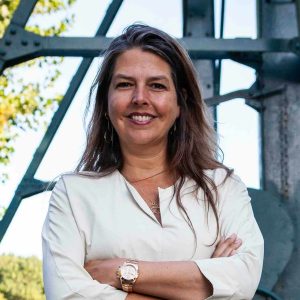
Ik maak de intenties van ondernemen en samenwerken beleefbaar en begeleid ze naar praktische vormen.
Alle informatie die we verstrekken is altijd waarheidsgetrouw en accuraat. Mocht je vragen hebben of iets willen delen, je kunt altijd bellen of mailen. Vóór je je inschrijft raden we je aan om de oriëntatiedag te doen. Als je overweegt om in te stappen, doen we ook een intake-gesprek. Ook tijdens deelname kun je altijd bellen of mailen of een afspraak maken voor een persoonlijk gesprek. Alles wat we bespreken blijft altijd onder ons.
All teachers live what they teach, so they are experts by experience in their field, and in addition, they are always approachable.
Van te voren, tijdens en na de training is helder wat docenten en deelnemers van elkaar kunnen verwachten. Er zijn intake-gesprekken, tussengesprekken en evaluatiegesprekken. Als er onduidelijkheden zijn, kan er altijd gebeld of gemaild worden.
Als je op deze link klinkt, vind je een voorbeeld van een Verbintenis voor de Leergang Eigentijds Ondernemen: Commitment.
The teachers stand by the quality of their lessons and are accountable for it. Participants get out what they put in. If teachers feel that participants are not putting in enough, they will be lovingly addressed. Teachers and participants walk a path together in connection with themselves, each other and the whole.
The goal of all Economy Transformers education and training is to provide tools that participants can use to help themselves blossom socially to make the whole more beautiful, better, truer. Everyone helps each other in this process. Life itself is the examiner. Because we observe each other during the process, we will motivate, encourage, assist each other in time. As Economy Transformers, we will never test or examine. However, we do ask participants to present their development on a regular basis.
Click here for the complaint policy: complaints mechanism.
Economy Transformers Academy is CRKBO-registered. This means that we meet quality requirements in the field of short vocational education.
Our registration guarantees that we act with care, reliability and transparency, and that our trainings are in line with the needs of our participants. To the right, we explain the quality requirements step by step, so you can get an idea of the journey to and through 😉 the Cohabitation Art Course.
And you have the books Free, Equal & Living Together Of Damaris Matthijsen and The Fourth Scenario of Jac Hielema already read and listened to all the podcasts. Then you can sign up for a meeting night Economy Transformers comes to you or an Orientation Day Learning Walk Together. To get acquainted with the teachers' methods and potential fellow participants.
You are welcome to bring yourself in with any questions and answers you may have. You can always contact Jac Hielema, see: contact.
Then make an appointment with Jac Hielema for a one-on-one intake interview.
During that conversation, we get to know each other better and talk through the Commitment you will be emailed in advance, see: Commitment.
During the interview, Jac Hielema asks if you are willing to meet the participation requirements, Article 24. But more on that later.
First, this:
During the Art of Living Together course, among other things, you will learn about the so-called Six Keys to Transition, whole story. In addition to allowing you to set your own learning goals each year that the teachers will tailor their lessons to, there are also general learning goals of the Art of Living Together Course. These are them using those six keys:
General learning objective of the Art of Living Together course
The Samenlevenskunst course guides you on a profound journey of discovery into how you as a human being, with your unique qualities and inner strength, can contribute to a humane and Earth-worthy society. Through the six keys you will learn:
The Course helps you not only understand these six keys, but also live them. You grow into a Collaborative Life Artist: someone who embodies and realizes both personal and social renewal from love and trust.
No prior knowledge of any kind is necessary. Starting point is always the human being as he or she is here and now, including her/his thoughts and feelings, in the reality as it is here and now. No more and no less. However, each participant is asked to meet the following conditions:
These are the participant requirements:
Participant declares that he/she:
a. is willing to reflect on his/her own thinking and actions,
b. feels a desire to get one or more ideals clear and realize them alone or with others,
c. be willing to work with fellow participants to form a safe bed in which everything can be explored, discussed, questioned, named and done that is necessary to accomplish the above goals.
Participant should be familiar with the grievance procedure:
The complaint policy can be found here: complaints mechanism. And is based on the premise: we will work it out together and if not, we will find someone we both trust and ask her/him to act as a mediator.
Participant may rely on the confidentiality clause:
Everything that is discussed during the intake interview, lessons, interim conversations, conversations during exercises and the evaluation interview may be shared with third parties. It is hereby expressly requested to speak with integrity and discretion about all involved and situations.
The teachers and assistants lovingly and carefully exchange their observations and experiences with and about the participants. This is done with the aim of gaining an ever better understanding of each participant's learning needs and abilities, so that the guidance can be best tailored to them.
How do we work together to ensure a safe atmosphere during classes?
During classes, and in fact at every Economy Transformers meeting, we adhere to the following guidelines:
Safety guidelines for the Living Together Course:
1. I am
2. Value
3. Property
4. Organization
5. Relationship
6. Earth
Lock
We are aware that perfection does not exist and that sometimes we will deviate from these guidelines. We do not see this as a failure, but as an opportunity to learn and practice forgiveness, both for ourselves and each other. Together we work to create a safe and inspiring environment in which each can come into his or her own.
During the intake interview we also discuss the price. In the first year, Everyone can choose between three prices. And if the right price is not among them, we can make other arrangements.
The creation of the second- and third-year awards is part of the process.
You can pay the price for the Course in one, two or three installments.
We can also agree on another payment arrangement on the spot. However, we do strive for a proper balance of give and take.
During the 2025/2026 school year, Damaris Matthijsen and Jac Hielema will be providing a Curriculum in the Art of Living Together for the tenth year. In other words, they have been delivering for ten consecutive years without interruption. They take full responsibility for the quality of the course. There are regular evaluations, formal and informal. All criticism, tips, questions, comments and proposals are taken seriously and taken into account in the further development of the course. However, decisions are made by Jac and Damaris, who will always substantiate and explain them if desired.
Even if after the intake interview you are still not sure if you want to get in and join, you can at least participate in the first meeting. After the first meeting we ask you to make a decision. So that at the second meeting we will have formed a permanent group in which we will do the year.
Of course, anyone can always decide to drop out for any reason. Up to and including the fifth meeting, you will receive a partial refund of your tuition.
Do you have any questions or want to share anything else? You can do so by emailing Jac Hielema: [email protected] or to call him: 06-14687873
Kind regards,
Damaris & Jac
Listed below are the four scenarios, based on what is in Free, Equal & Living Together and The Fourth Scenario is described:
The capitalist scenario (First Scenario).
The socialist scenario (Second Scenario).
The mixed scenario (Third Scenario).
The free scenario (Fourth Scenario)
With these four scenarios, The Fourth Scenario a clear contrast between existing social systems and a forward-looking, regenerative approach.
Hier is een beknopte uitleg van de zes sleutels zoals deze aan bod komen voor Gelijk, Vrij, Samenwerken (naar het boek Free, Equal & Living Together van Damaris Matthijsen):
I am – Ondernemen vanuit de essentie
Value – Value creation independent of financial compulsion
Property – Land, labor and capital at the service of the whole
Organization – Cooperation based on equality
Relationship – Connection based on trust and openness
Earth – Cooperation with nature instead of exploitation
Deze zes sleutels vormen samen een raamwerk voor het bouwen van een rechtvaardige, duurzame en menswaardige samenleving. Ze helpen zowel individuen als organisties en gemeenschappen om bewust en in harmonie met zichzelf, anderen en de Aarde te leven.
When the six keys are not applied consciously and in connection, the following occurs shadow keys. These can be divided into two main patterns:
Fear (Shadow of ‘I am’)
Hatred (Shadow of ‘Value’)
Doubt (Shadow of ‘Property’)
Dynamics:
When fear, hatred and doubt control human beings too much, it creates three false strategies as ways of dealing with them. These shadows disfigure our relationship to Earth, relationship and organization.
False surrender (Shadow of ‘Earth’)
False power (Shadow of ‘Relationship’)
False hope (Shadow of ‘Organization’)
The key to transformation lies in awareness and taking responsibility:
By applying the six keys consciously and in connection, a human- and Earth-worthy society can emerge.
The Contemporary Entrepreneurship course guides you on a profound journey of discovery into how you as a human being, with your unique qualities and inner strength, can contribute to a human and Earth-worthy society. This requires not only developing the six keys, but also seeing through and transforming the shadow keys that can keep you from doing so.
Through these six keys you will learn:
The Collaborative Living Art Course helps you not only understand the six keys, but also live them, by actively working to see through and transform the shadows that can block them.
You grow into a Collaborative Life Artist: someone who from love and trust embodies and realizes not only personal but also social innovation.
We use cookies for tracking statistics, storing preferences and for marketing purposes. By clicking ‘view preferences’ you can read more about our cookies and set your preferences. By clicking ‘accept’ you agree to all cookies as described.