

Three-year Collaborative Living Course

Bettina Poels:" Economy Transformers has transformed my life. I have been allowed to experience that what I want to change in the outside world starts inside. They have given me space and a safe bed and footing for shaping the future through the six keys. They have given me the foundation for the future" Makke Vollenhoven: "Finding a starting point within yourself to live from the inside out!".

Do you long for a humane & Earth-worthy society?

A society where everyone can be themselves, regardless of origin, belief, sex, orientation or skin color. Where culture offers room for connection and authenticity. Where the economy does justice to everyone and the common cake is shared fairly.

Maybe it seems like an unattainable ideal. But what if it's a real possibility? A future to which you, exactly as you are, can already contribute directly?

During the Art of Living Together course you will discover how you can make a difference from your unique place. You learn to understand people, society and yourself more deeply. And you develop the insights and skills to build a future of equality, freedom and togetherness with others. Join us. It starts with you.

Who is it for?

The Art of Living Together course is intended for everyone who wants to contribute to a humane economy and society. Whether you run a household with a partner, work in a company or organization, lead an initiative or business, are part of a living or working community, or are active in society as an engaged citizen-you are most welcome.

Even if you, as a trainer, want to work from the ideas of Economy Transformers, the course provides an inspiring foundation.

No prior knowledge is necessary. You, exactly as you are now, are the starting point. Together we will discover how you can make a difference from your place.

What do we offer?

We offer a rich and dynamic program in which you get to know yourself and the world around you in a new way. Through experiential experiments and exercises, based on the principle so in, so out, you discover how you are part of a living, constantly changing (social) reality.

You will have the space to explore what your work and life goals are in this reality and how you can realize them in a way that contributes to social renewal and transforming the economy. The program inspires you not only to discover your unique potential, but also to bring it into the world in a meaningful way.

How does it work?

During the Art of Living Together course you explore how your inner world relates to the outer (social) reality. You experiment with your intuition, clearly map out your work and life goals and lovingly explore themes such as free, equal and together, the six keys, money, ownership, taking initiative, community building and decision making. Together you work and learn on the basis of equality, in a safe atmosphere where anything can be said and explored.

The format is uncluttered:

  • You will attend ten monthly class days and one additional Saturday or Sunday per year.
  • There is a choice between a Friday series and a Monday series.
  • In addition to classes, you will do homework assignments, research and reflection alone or with your classmates.
  • At the beginning of each year you determine your own learning goals in addition to the general learning intention, see below.
  •  

The apprenticeship lasts two years and offers an optional third year.

In addition to the classes taught by Jac and Damaris, the main teachers, we offer an evening program in which you do what we call integration work with Marije. This helps you to work through any resistances that get in the way of living your star at a deeper layer.

In conclusion

To discover whether this course suits you, we organize orientation days and intake interviews. This helps you and us to get a clear sense of whether we are a good match.

“Since I did the Training in the Art of Living Together, I feel a (hitherto unknown) pleasant peace within me and trust my intuition. I experience it as follows: always I felt a bit of a wanderer in the-big-people-world, had the feeling that everyone was given a manual at birth and I was forgotten. I didn't really know how to behave. I tried on all kinds of “jackets” that I thought looked good on others. But when I wore them, I still didn't feel very comfortable in them, or it was only nice for a certain period of time. And then I saw another jacket. This way of discovery is over! Now I design my own jacket! From within there is now a voice that dares to let itself be heard more and more. With this I color my own fabric. And even though the coat is far from finished, maybe it never will be, I am so happy with it: it fits like a glove.” - Marleen Rumph

What do you learn?

in the first year:

Man, know yourself!

Your learning goal for the first year is to get to know the human being in his totality: how you as mind, soul and body, thinking, feeling and willing, are part of reality. You become aware of the creative force within yourself and learn to trust your intuitive thinking. Through observation, reflection and practice you will discover the connection between head, heart and hands. This year focuses on overcoming the fear of your own being and doubts about the power of your ideas, so that you can live and act from within. The year concludes with a developmental image of yourself, which you present to your classmates. In bullets:

  • clarity regarding principles and form of today's society and economy,
  • perspective on principles and shape of a future human- and Earth-worthy economy and society,
  • Trusting your own perception and thinking (intuition),
  • thinking and acting with your whole body (your heart as well as your belly),
  • examination of the concepts of free, equal and together 
  • introduction of the six keys and learning to work with them especially on the inside
  • Know your own life, work and learning goals,
  • move between free (individuality) and together (that global economy),
  • insight into own obstacles to living your own star
  • dealing with fear/mood, hate/love and doubt/security.

in the second year:

Man, know society!

In the second year, your learning objective lies in learning about the society as a whole of which you are a part. You explore the human images that underlie different scenarios and structures in society. You will learn how the principles of free, equal and together work not only as inner needs, but also as organizing principles in society. Through exercises and research, you will discover what it takes to create life-giving structures in which each human being recognizes himself as a living being in connection with others and all life at all. This year concludes with a presentation of a topic covered this year to invited third parties. In bullets:

  • clarity regarding how the current money system works,
  • perspective on a future human- and Earth-worthy money system,
  • Finding a healthy relationship and handling of money,
  • peace of mind and overview with regard to decision-making, both personally and within organizations,
  • Research on initiative taking and community building,
  • research on ownership of land, labor and capital and the introduction of triple ownership,
  • gain increasing clarity on life, work and learning goals in a form that suits you.

in the third year:

The third year focuses on the application of all that you have learned. Your learning goal is to make your being socially fruitful. You integrate everything you have discovered into your own initiative, organization or work. You develop new forms and structures that align with your inner star and essence. This year helps you prepare your master's thesis, in which you show how, from your deepest core, you contribute to a human- and Earth-worthy society. You will learn how to embody free, equal and together as a co-living artist and make this visible in the world.

To the right you will find deeper information about the principles of Economy Transformers and development intentions of Learning to Live Together:

Listed below are the four scenarios, based on what is in Free, Equal & Living Together and The Fourth Scenario is described:


The four scenarios

  1. The capitalist scenario (First Scenario).

    • Characteristics: Exchange and allocation of land, labor and capital are dominated by the market. Economic interest prevails and freedom is seen as the freedom of ownership and competition.
    • Criticism: Capitalism ignores equality and cohesion. It leads to inequality, exploitation and ecological destruction.
    •  
  2. The socialist scenario (Second Scenario).

    • Characteristics: Here the state becomes the dominant actor in society. Land, labor and capital are allocated through central planning and bureaucracy.
    • Criticism: Socialism denies freedom through its emphasis on state control. This often leads to alienation and inefficiency in the economy.
    •  
  3. The mixed scenario (Third Scenario).

    • Characteristics: A combination of market and state, mixing elements of capitalism and socialism. Often referred to as the Rhineland model, where economic decisions are influenced by both political elites and market participants.
    • Criticism: This scenario often combines the disadvantages of both capitalism and socialism, such as concentration of power with an elite and lack of true freedom and equality.
    •  
  4. The free scenario (Fourth Scenario)

    • Characteristics: The means of production are managed and allocated outside the market and state, through proper mutual consultation between stakeholders. Land, labor and capital are directed toward fulfilling common and individual needs, with respect for people and Earth.
    • Objective: Freedom, equality and cohesion are realized in an integrated way. The emphasis is on cooperation, local ownership and regeneration of natural and social systems.
    • Vision: This scenario offers a fundamental transformation of social structures and sees humans as the creators of a humane society.
    •  

With these four scenarios, The Fourth Scenario a clear contrast between existing social systems and a forward-looking, regenerative approach.

Here is a brief explanation of the six keys from Free, Equal & Living Together By Damaris Matthijsen:

The six keys to a humane and Earth-worthy society

  1. I amLiving from your essence

    • This is about self-knowledge and authenticity. Who are you really? What is your unique contribution to the world?
    • Only when you know yourself and are true to your inner motives can you participate in society in a free and conscious way.
    •  
  2. ValueValue creation independent of financial compulsion

    • Value is about what you contribute to the world and how that becomes visible.
    • In a healthy society, value is not determined by money, but by how much it contributes to people and Earth.
    •  
  3. PropertyLand, labor and capital at the service of the whole

    • Property is not a personal possession, but something to be handled responsibly.
    • In a free, equal and coexisting system, productive resources are managed in accordance with the community and the greater good.
    •  
  4. OrganizationCooperation based on equality

    • Decision-making and organization should take place in a way that does justice to everyone's voice and contribution.
    • Power is not concentrated, but distributed through natural authority and aligned structures.
    •  
  5. RelationshipConnection based on trust and openness

    • Healthy relationships in society are based on respect, listening and seeing the other as an equal fellow human being.
    • Relationships transcend ego interest and are focused on cooperation and mutual alignment.
    •  
  6. EarthCooperation with nature instead of exploitation

    • The Earth is not seen as a source of resources to be depleted, but as a living entity with which we must live in harmony.
    • A healthy economy and society respect ecological limits and regenerate rather than destroy.
    •  

Together, these six keys form a framework for building a just, sustainable and humane society. They help both individuals and communities live consciously and in harmony with themselves, others and the Earth.

Shadow keys: When the six keys lose their power

When the six keys are not applied consciously and in connection, the following occurs shadow keys. These can be divided into two main patterns:

  1. The warning triangle - Fear, hatred and doubt keep man trapped in powerlessness and destructive interactions.
  2. The three false strategies - False surrender, false power and false hope disfigure our relationship to Earth, relationship and organization.

1. The danger triangle: fear, hate and doubt

  1. Fear (Shadow of ‘I am’)

    • Fear undermines the true Self and stifles inner freedom.
    • Instead of living from one's own essence, fear paralyzes the individual and makes them dependent on external affirmation or control.
    • Fear leads to conformism and avoidance of responsibility, making authentic action impossible.
    •  
  2. Hatred (Shadow of ‘Value’)

    • Hatred arises when the value of Self or other is not recognized and is hurt.
    • Instead of creating and recognizing real value, a desire for destruction arises: one wants to undermine oneself or others.
    • This leads to competition, envy and the belief that one can only prove oneself by beating another.
    •  
  3. Doubt (Shadow of ‘Property’)

    • Doubt destroys the ability to take ownership and responsibility.
    • Instead of consciously dealing with possession and responsibility, people get stuck in indecision, causing systems and structures to collapse or crash.
    • This leads to fear of loss, a sense of insecurity and an obsession with control.
    •  

Dynamics:

  • Fear paralyzes the Self and makes people dependent.
  • Hatred focuses outward, on the other, and creates division and conflict.
  • Doubt causes a failure to take responsibility, thus preventing real change.
  •  

2. The three false strategies: False surrender, false power and false hope

When fear, hatred and doubt control human beings too much, it creates three false strategies as ways of dealing with them. These shadows disfigure our relationship to Earth, relationship and organization.

  1. False surrender (Shadow of ‘Earth’)

    • Instead of truly cooperating with the Earth and life, a form of surrender arises that amounts to passivity and indifference.
    • This leads to an attitude of “it doesn't matter anyway,” spiritual detachment or even destructive nihilism.
    • The connection to the greater whole is not felt or acknowledged, thus preventing regeneration and care for life.
    •  
  2. False power (Shadow of ‘Relationship’)

    • Instead of building relationships based on trust and equality, power is used as a control mechanism.
    • This leads to manipulation, dependency relationships and hierarchical structures in which the other is not seen as equal.
    • True connection is replaced by dominance or submission.
    •  
  3. False hope (Shadow of ‘Organization’)

    • Instead of organizing clearly and taking responsibility for realistic change, a misplaced hope of external salvation or utopia arises.
    • This leads to the pursuit of illusions, unfounded ideals or blind faith in systems that do not work.
    • As a result, organization becomes chaotic, irrational or based on false certainties.

How do you free yourself from the shadow keys?

The key to transformation lies in awareness and taking responsibility:

  • Stepping out of the warning triangle means turning fear into trust, transforming hate into loving creation and replacing doubt with conscious ownership.
  • Breaking the false strategies means truly connecting with Earth, building relationships from equality and creating organizational structures that actually work and are supported by the community.

By applying the six keys consciously and in connection, a human- and Earth-worthy society can emerge.

General development intentions

The Living Together course guides you on a profound journey of discovery into how you as a human being, with your unique qualities and inner strength, can contribute to a human and Earth-worthy society. This requires not only developing the six keys, but also seeing through and transforming the shadow keys that can keep you from doing so.

Through these six keys you will learn:


1. I am → From fear to inner freedom

  • Target: Discovering your personal essence and unique motivations and giving direction to your life from intuition and creativity. You will learn to live your own star and fulfill your potential.
  • Challenge: Fear can paralyze you, plunge you into doubt about who you are and make you dependent on external affirmation.
  • Question: How do you learn to trust your deepest being and make choices from inner certainty, instead of being guided by fear?

2. Value → From hatred to true creative power

  • Target: To understand what you have to give and how your abilities contribute to meeting real needs, both for yourself and others. You develop a healthy balance between giving and taking.
  • Challenge: Hatred and jealousy can arise when you do not recognize your value or when you perceive others' as threatening.
  • Question: How can you truly embrace your unique value and put it to work for the greater good without undermining yourself or others?

3. Ownership → From doubt to responsibility

  • Target: Taking ownership of your experiences, insights and choices. You explore how you deal with land, labor and capital and how to manage them in connection with people and Earth.
  • Challenge: Doubt can keep you from taking responsibility, leaving you stuck in indecision or powerlessness.
  • Question: How do you learn to perceive clearly and take responsibility confidently for what your task and role in the world is?

4. Organization → From false hope to true creativity

  • Target: Organize collaborations equally and naturally. You will learn how to shape power, control and decision-making from trust and equality.
  • Challenge: False hope can tempt you to continue to believe in systems and structures that don't work, or to wait for an outside solution.
  • Question: How do you build real, functioning structures in which trust and equality are the basis, rather than continuing to hope for external change?

5. Relationship → From false power to authentic connection

  • Target: Build responsible and authentic relationships, both with yourself and others and with the world. You develop communication that strengthens trust and deepens connection.
  • Challenge: False power can disrupt relationships through control, manipulation or dependency dynamics.
  • Question: How do you create relationships that center on freedom, equality and genuine connection, without dominating the other person or making yourself small?

6. Earth → From false surrender to true cooperation with life

  • Target: Aligning your actions with the Earth's natural cycles and boundaries. You learn to live and work in harmony with the reality of nature and contribute to a sustainable and inclusive world.
  • Challenge: False surrender can lead to fatalism, passivity or spiritual detachment, causing you to stop facing reality and not actively contributing.
  • Question: How do you truly connect with the Earth and life without giving away your responsibility or falling into cynicism?

The Transformation to Living Together

The Collaborative Living Art Course helps you not only understand the six keys, but also live them, by actively working to see through and transform the shadows that can block them.

You grow into a Collaborative Life Artist: someone who from love and trust embodies and realizes not only personal but also social innovation.
Economy Transformers

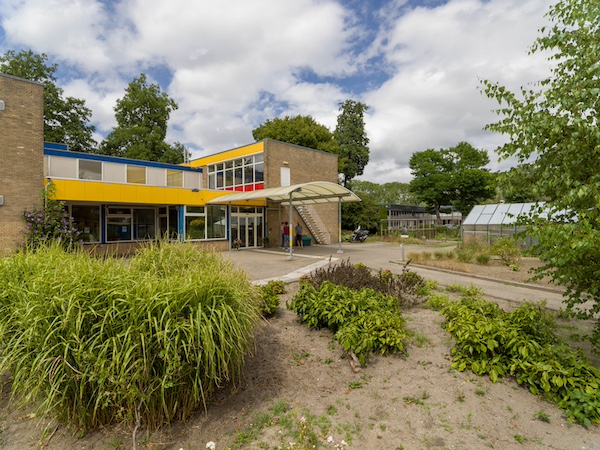
Location of the Monday series:

Van Bijnkershoeklaan 10

   Utrecht

06-38331130
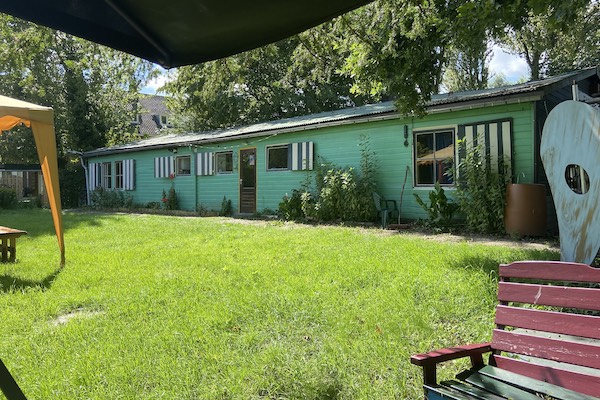
Location of the Friday series:

Cremer Street 245/247

3532 BJ Utrecht

030 - 293 87 17

Economy Transformers

What do the days look like practically?

Edited by Damaris Matthijsen & Jac Hielema

  • 09:30 reception with coffee/tea and sweets
  • 10 a.m. - 1 p.m. morning program
  • 1 p.m. Lunch (bring your own)
  • 2 p.m. - 5 p.m. afternoon program
  • 5:30 p.m. supper (potluck)
  • 7 p.m. - 9 p.m. evening program (six out of ten times)

In the evenings we do integration work

provided by Marije Vermerris

Dates of meetings 2025/2026

There is room for 2 x 12 participants, 12 in the Monday series at location De Paraplu and 12 in the Friday series at location Centrum EMMA, both locations are in Utrecht.

Location Neighborhood House the Umbrella: Mondays Sept. 15, 2025, Sundays Oct. 12 & Monday Oct. 13, and further Mondays Nov. 17, Dec. 15, Jan. 12, 2026, Feb. 16, March 16, April 13, May 18 and June 15. ===> there are no more spots in the Monday series 

Location Center EMMA: Friday, Sept. 19, 2025, Friday, Oct. 24 & Saturday, Oct. 25, and further Fridays, Nov. 21, Dec. 19, Jan. 16, 2026, Feb. 20, March 20, April 17, May 22 and June 19. ===> ten spots are still available in the Friday series

Investment*

freshmen pay a flat fee:

  • € 1500 free-rate (what you can give now),
  • €2,500 equal-rate (the price that settles everything),
  • €3500 together rate (the price that enables the continued development of Economy Transformers and helps others enjoy it too).

sophomores and juniors determine their own awards:

Determining an appropriate price for the second and third years of the Art of Living Together course is part of the process.

* Economy Transformers is exempt from VAT. All prices do not include lunch (bring your own) evening meals (potluck), including coffee, tea and goodies. Price should never be a reason not to participate.

what do you receive for this:
  • initial interview one-on-one
  • six days from 10 a.m. to 9 p.m.
  • five days from 10 a.m. to 5 p.m.
  • two additional in-depth days of your choice
  • Access to Economy Transformers' online learning environment and community, respectively
  • a certificate of participation
  • notebook
  • the books of Damaris and Jac
  • on-site interim interview for freshmen
  • on-site midterm interview for sophomores
  • one-on-one guidance toward the master's thesis for third-year students
  • and many more

the trainers

DeelgenotenDam.jpeg

Damaris Matthijsen

The common thread in my life is finding structures that make human and natural life possible.
DeelgenotenJac.jpeg

Jac Hielema

I delve into the money system, social forms and man as the creator of society.
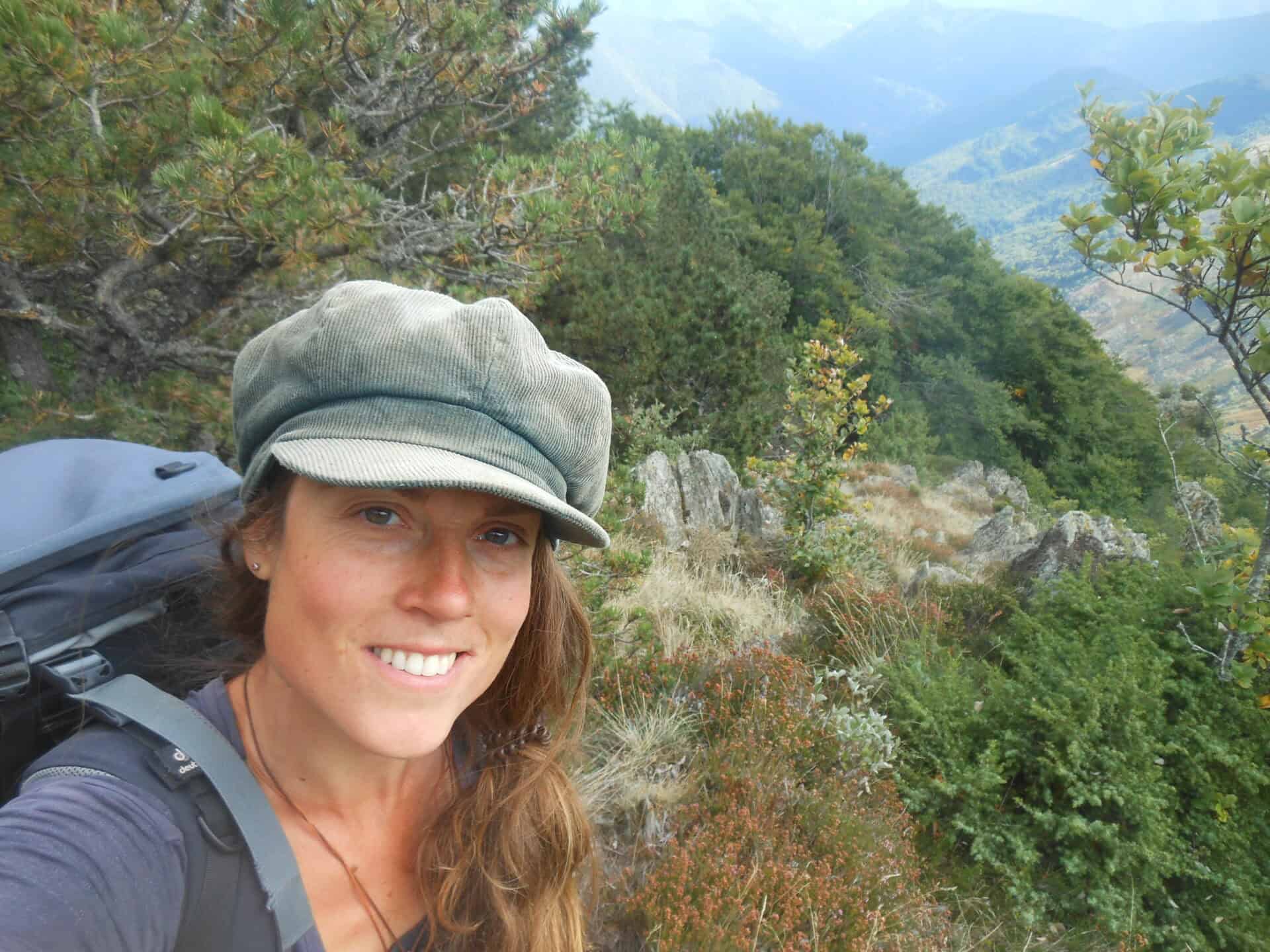
Marije Vermerris

I want to create place where we live in equality and everyone's essence can be expressed.

Economy Transformers

Economy Transformers Academy is CRKBO-registered. This means that we meet quality requirements in the field of short vocational education.

Our registration guarantees that we act with care, reliability and transparency, and that our trainings are in line with the needs of our participants. To the right, we explain the quality requirements step by step, so you can get an idea of the journey to and through 😉 the Cohabitation Art Course.

And you have the books Free, Equal & Living Together Of Damaris Matthijsen and The Fourth Scenario of Jac Hielema already read and listened to all the podcasts. Then you can sign up for a meeting night Economy Transformers comes to you or an Orientation Day Learning Walk Together. To get acquainted with the teachers' methods and potential fellow participants.

You are welcome to bring yourself in with any questions and answers you may have. You can always contact Jac Hielema, see: contact.

Then make an appointment with Jac Hielema for a one-on-one intake interview.

During that conversation, we get to know each other better and talk through the Commitment you will be emailed in advance, see: Commitment.

During the interview, Jac Hielema asks if you are willing to meet the participation requirements, Article 24. But more on that later.

First, this:

During the Art of Living Together course, among other things, you will learn about the so-called Six Keys to Transition, whole story. In addition to allowing you to set your own learning goals each year that the teachers will tailor their lessons to, there are also general learning goals of the Art of Living Together Course. These are them using those six keys:

General learning objective of the Art of Living Together course
The Samenlevenskunst course guides you on a profound journey of discovery into how you as a human being, with your unique qualities and inner strength, can contribute to a humane and Earth-worthy society. Through the six keys you will learn:

  • I am: Discovering your personal essence and unique motivations and using your intuition and creativity to guide your life. You will learn to live your own star and fulfill your potential.
  • Value: To understand what you have to give and how your abilities contribute to meeting real needs, both for yourself and others. You develop a healthy balance between giving and taking.
  • Property: Taking ownership of your experiences, insights and the choices you make. You explore how you deal with land, labor and capital, and how to manage them in connection with people and Earth.
  • Organization: Organize collaborations in a free, equal, together way. You will learn how to shape your power, (co-)control and decision-making from love and trust.
  • Relationship: Build responsible and authentic relationships, both with yourself, others, and the world. You develop communication that strengthens trust and deepens connection.
  • Earth: Aligning your actions with the natural cycles and boundaries of the Earth. You learn to live and work in harmony with the realities of nature and contemporary society while contributing to a sustainable and inclusive world.

The Course helps you not only understand these six keys, but also live them. You grow into a Collaborative Life Artist: someone who embodies and realizes both personal and social renewal from love and trust.


No prior knowledge of any kind is necessary. Starting point is always the human being as he or she is here and now, including her/his thoughts and feelings, in the reality as it is here and now. No more and no less. However, each participant is asked to meet the following conditions:

These are the participant requirements:

Participant declares that he/she:

        a. is willing to reflect on his/her own thinking and actions,

        b. feels a desire to get one or more ideals clear and realize them alone or with others,

        c. be willing to work with fellow participants to form a safe bed in which everything can be explored, discussed, questioned, named and done that is necessary to accomplish the above goals.

Participant should be familiar with the grievance procedure:

The complaint policy can be found here: complaints mechanism. And is based on the premise: we will work it out together and if not, we will find someone we both trust and ask her/him to act as a mediator.

Participant may rely on the confidentiality clause:

Everything that is discussed during the intake interview, lessons, interim conversations, conversations during exercises and the evaluation interview may be shared with third parties. It is hereby expressly requested to speak with integrity and discretion about all involved and situations.

The teachers and assistants lovingly and carefully exchange their observations and experiences with and about the participants. This is done with the aim of gaining an ever better understanding of each participant's learning needs and abilities, so that the guidance can be best tailored to them.

How do we work together to ensure a safe atmosphere during classes?

During classes, and in fact at every Economy Transformers meeting, we adhere to the following guidelines:

Safety guidelines for the Living Together Course:

1. I am

  • We are here to enable ourselves and each other. This means we focus on acknowledging and supporting each other's unique path without judging, analyzing, saving or improving.
  • Each participant has the freedom to participate or not in an exercise and/or to share what he or she has observed or experienced. This freedom is always respected, as long as the group process as a whole is not disrupted.
  • We take responsibility for our own thoughts, feelings, words and actions. We respect the other person's autonomy by not imposing meaning or expectations.

2. Value

  • We share candidly what we experience and live inwardly and outwardly. Our honesty and vulnerability are our contribution to the process, supporting and inspiring each other.
  • We do not hide our emotions such as pain, anger or sadness, but share them honestly, without holding others responsible. This contributes to the valuable exchange within the group.
  • If we see a judgment or analysis coming into us, we acknowledge it and then bring our attention back to ourselves and the other person in the here and now.

3. Property

  • We take ownership of our own feelings and experiences. This means we make ‘I’ statements, not ‘you/they/we’ statements and take responsibility for what we bring to the group.
  • When another shares his or her anger or hurt, we acknowledge it without defending ourselves or justifying our words and/or actions. We are, however, honest about what feelings come to us.
  • Everything we share with each other, we cherish respectfully in love and trust. We treat everyone's contribution as a valuable part of the shared process.

4. Organization

  • We give and take each other's undivided attention in the here and now. Silence and quiet are honored as an essential part of the group process.
  • If we feel we are losing sight of our learning goal, we discuss it together. For example, by striking the singing bowl and creating a moment of silence to refocus on our learning goal.
  • We respect the group structure and work together on the basis of equality. Everyone has the space to follow his or her own pace and process.

5. Relationship

  • We build relationships based on honesty, respect and recognition of each other's uniqueness. We are present in the here and now, without straying into the past or future unless relevant in the moment.
  • We listen attentively and without interruption to what the other person wants to share. When emotions or judgments arise, we acknowledge them within ourselves without projecting them onto the other person.
  • In relationships within the group, we respect everyone's learning and create a safe bed in which everything can be explored, discussed and shared.

6. Earth

  • We recognize the value of silence and rest as a natural basis for reflection and connection. These moments help us to connect with our own being, that of others and that of the whole of which we are all a part.
  • We stay rooted in the here and now and use our experiences to practice love and forgiveness, both for ourselves and others.
  • We see our group process as part of a greater whole. Everything we do and experience contributes to our own growth and the development of a human and Earth-worthy society.

Lock

We are aware that perfection does not exist and that sometimes we will deviate from these guidelines. We do not see this as a failure, but as an opportunity to learn and practice forgiveness, both for ourselves and each other. Together we work to create a safe and inspiring environment in which each can come into his or her own.


During the intake interview we also discuss the price. In the first year, Everyone can choose between three prices. And if the right price is not among them, we can make other arrangements.

The creation of the second- and third-year awards is part of the process.

You can pay the price for the Course in one, two or three installments.

We can also agree on another payment arrangement on the spot. However, we do strive for a proper balance of give and take.

During the 2025/2026 school year, Damaris Matthijsen and Jac Hielema will be providing a Curriculum in the Art of Living Together for the tenth year. In other words, they have been delivering for ten consecutive years without interruption. They take full responsibility for the quality of the course. There are regular evaluations, formal and informal. All criticism, tips, questions, comments and proposals are taken seriously and taken into account in the further development of the course. However, decisions are made by Jac and Damaris, who will always substantiate and explain them if desired.

Even if after the intake interview you are still not sure if you want to get in and join, you can at least participate in the first meeting. After the first meeting we ask you to make a decision. So that at the second meeting we will have formed a permanent group in which we will do the year.

Of course, anyone can always decide to drop out for any reason. Up to and including the fifth meeting, you will receive a partial refund of your tuition.

Do you have any questions or want to share anything else? You can do so by emailing Jac Hielema: [email protected] or to call him: 06-14687873

Kind regards,

Damaris & Jac

Economy Transformers is CRKBO directed.

This means that we meet quality requirements.

We are accountable for these quality requirements:

Economy Transformers

All information we provide is always truthful and accurate. Should you have any questions or want to share anything, you can always call or email. Before you enroll in the Collaborative Living Course, we encourage you to take the orientation day. If you are considering joining, we also do an intake interview. You can always call or email or make an appointment for a personal conversation during the course. Everything we discuss always remains between us.

All teachers live what they teach, so they are experts by experience in their field, and in addition, they are always approachable. 

Before, during and after the course, it is clear what teachers and participants can expect from each other. There are intake interviews, intermediate interviews and evaluation interviews. If anything is unclear, you can always call or email.

If you sound on this link, you will find an example of a Commitment for the Living Together Course: Commitment.

The teachers stand by the quality of their lessons and are accountable for it. Participants get out what they put in. If teachers feel that participants are not putting in enough, they will be lovingly addressed. Teachers and participants walk a path together in connection with themselves, each other and the whole.

The goal of all Economy Transformers education and training is to provide tools that participants can use to help themselves blossom socially to make the whole more beautiful, better, truer. Everyone helps each other in this process. Life itself is the examiner. Because we observe each other during the process, we will motivate, encourage, assist each other in time. As Economy Transformers, we will never test or examine. However, we do ask participants to present their development on a regular basis.

Click here for the complaint policy: complaints mechanism.

View your shopping cart here
0
Add Coupon Code
Subtotal